Designing Trust in a Digital Transition: From Word-of-Mouth to Online Acquisition
As Advantage Pools expanded into Google Ads and AI-assisted communication, new users began encountering the business without prior trust. This project explores how early interactions, particularly first impressions and AI-driven touchpoints, impact user perception, trust, and conversion.


Role
UX Researcher
Duration
2-3 weeks
Methods
Stakeholder Insights, User Journey Mapping
Overview
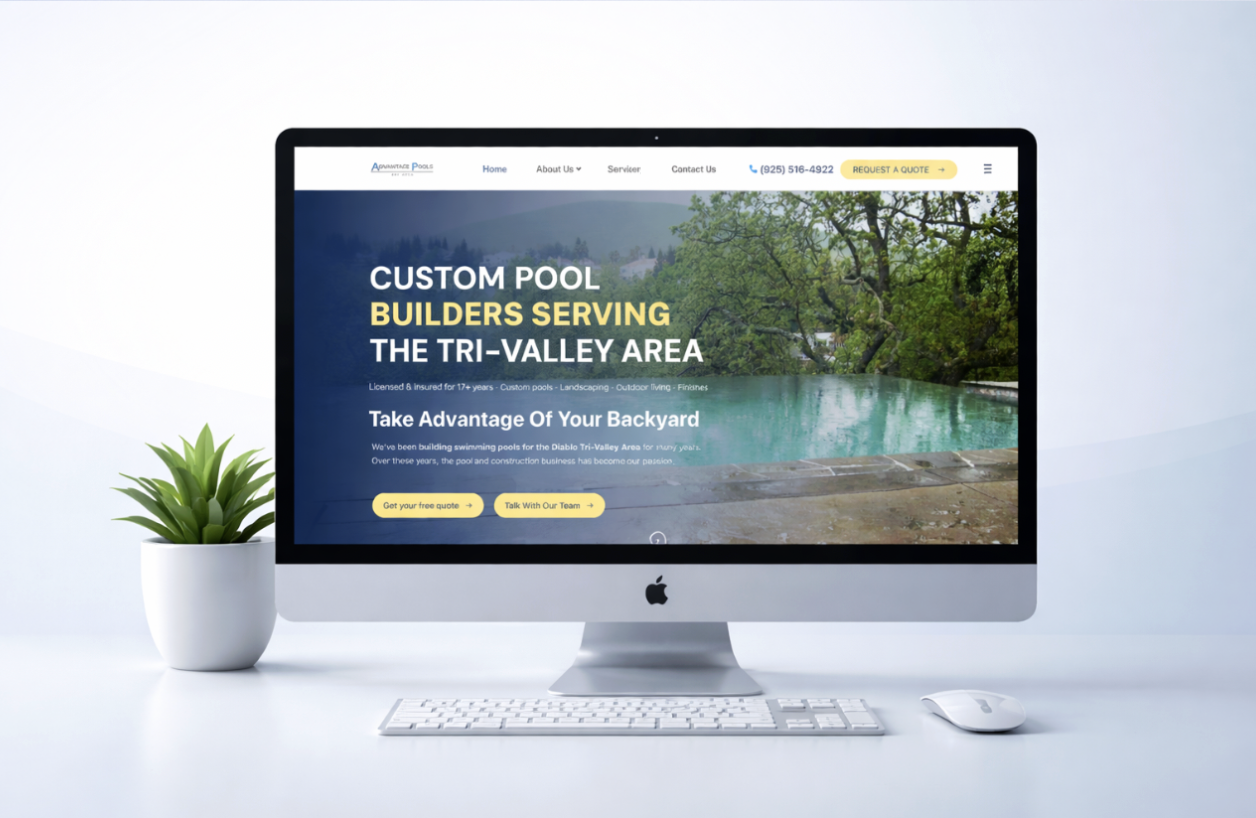
Advantage Pools is a residential contractor supporting pool construction, landscaping, outdoor living structures, and finishes. They have historically relied on word-of-mouth referrals to generate business. As the company began scaling through Google Ads, it introduced new digital touchpoints, including an AI phone assistant, to handle increased inbound leads. This shift created a new challenge: users were now encountering the business without pre-established trust, making early interactions critical to conversion.

Problem
As the business transitioned to digital acquisition, users entered the experience without prior context or credibility from referrals. While visibility increased, the early user experience introduced new friction, particularly in the initial communication stage.
The use of an AI phone assistant, while efficient, led to user frustration and skepticism. Many users expected a human interaction first and reacted negatively when that expectation was not met. As a result, trust was weakened at the most critical moment: first contact.
Experience Breakdown
Previous Model: Word-of-Mouth
- Trust built before interaction
- Users entered with confidence
- Lower friction in communication
Current Model: Digital & AI Journey
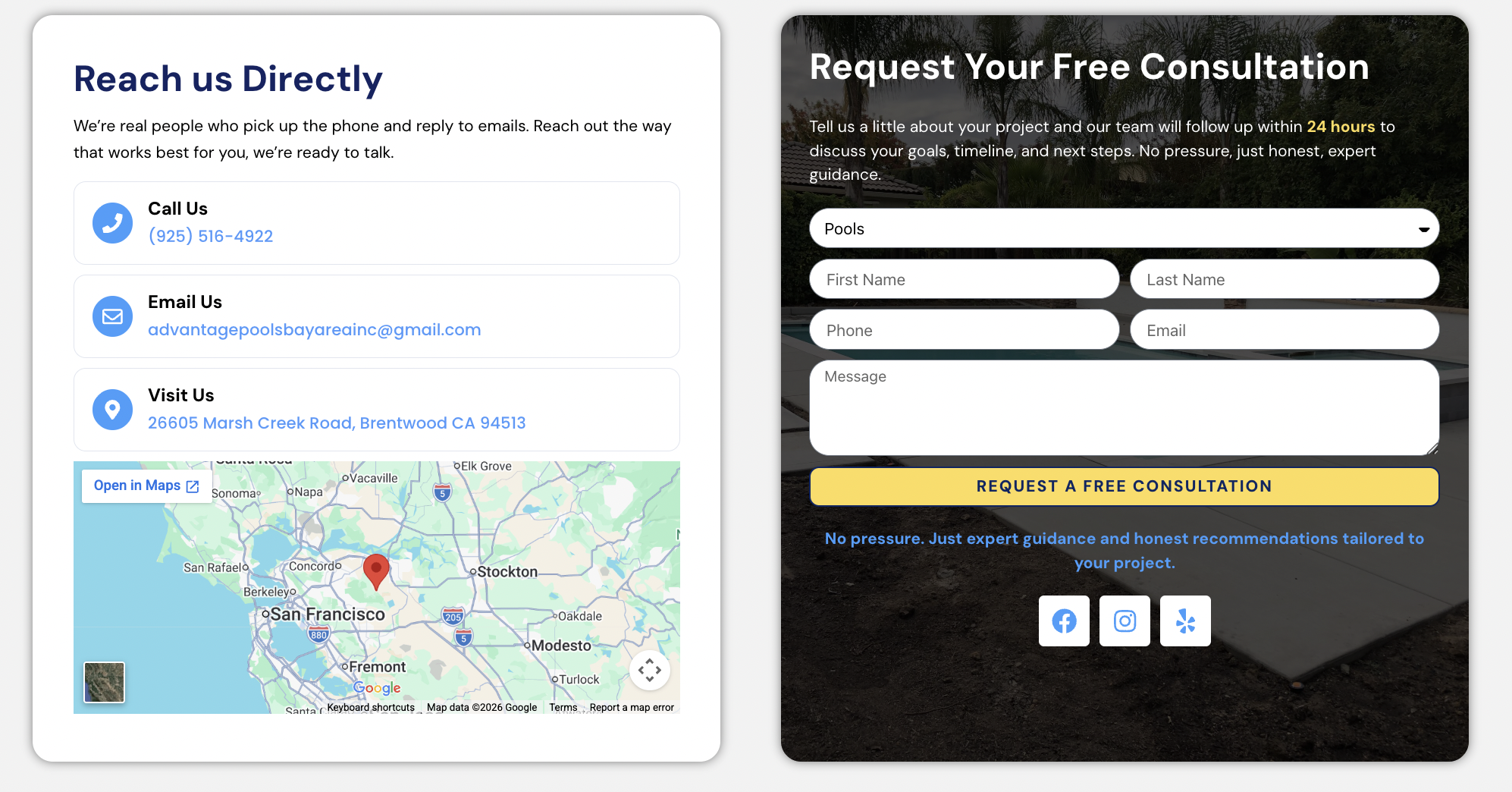
Google Ad → Website → AI Phone Assistant → Quote Request
New challenges:
- No pre-existing trust
- First impression happens instantly
- Communication shapes perception
Goal
Improve early-stage user experience to:
- Build trust early for users entering without prior familiarity or referrals
- Align communication with user expectations to reduce confusion and skepticism
- Minimize friction in first interactions to create a smoother onboarding experience
- Improve conversion by strengthening confidence at the earliest stages of engagement
Methods
This project combined stakeholder insights, experience analysis, and journey mapping to understand how users interact with the business during its transition to digital acquisition.
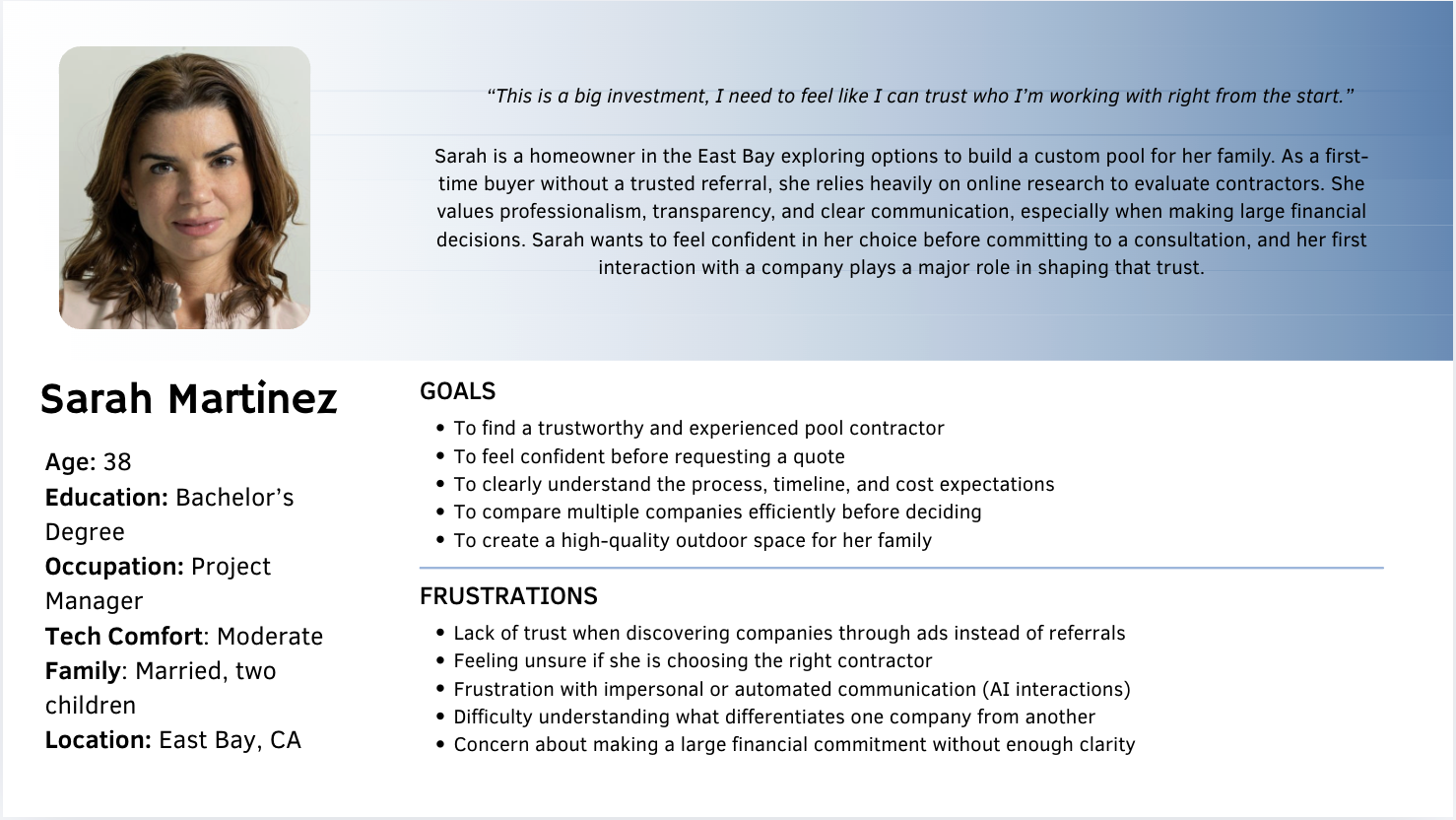
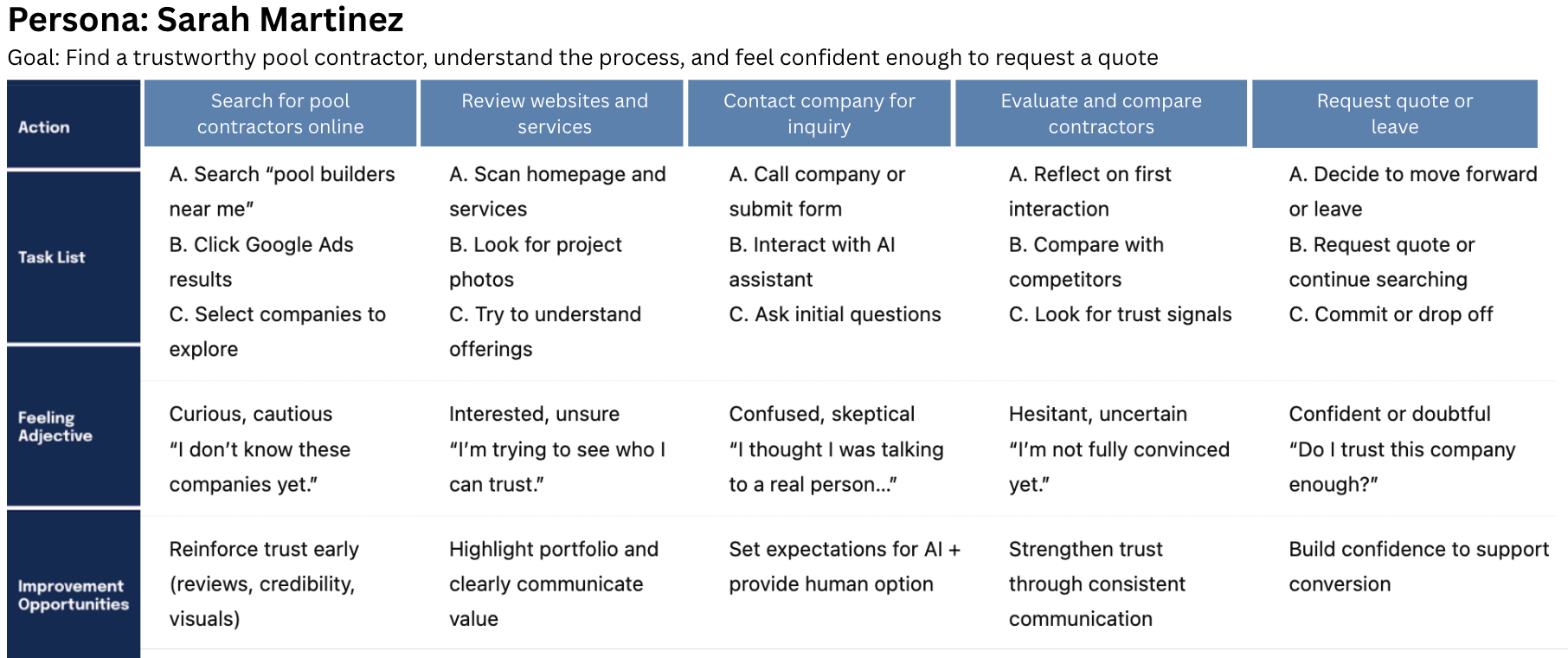
User Feedback
User feedback was gathered through client-reported experiences and informal conversations, highlighting key concerns around trust, communication, and initial interactions with the AI assistant.
“I thought I was talking to a real person at first, and then it felt off.”
“It’s fast, but I’d rather just talk to someone directly.”
“It sounded good, but once I realized it was AI, it kind of annoyed me.”
Core UX Problem
The system is designed to maximize efficiency by automating initial communication and handling high volumes of inbound leads. However, this efficiency comes at the expense of trust, as users entering without prior context expect a human, personalized interaction. In high-stakes decisions such as selecting a contractor, trust is not optional, but foundational. When automation replaces early reassurance, it can create friction, skepticism, and hesitation, ultimately impacting conversion.
Design & Strategy Direction
Rather than removing AI, the goal is to align it with user expectations.
1. Increase Transparency
- Clearly communicate AI usage upfront
- The phone assistant can say, "Hi I'm [name], an AI phone assistant, how can I help you?
Goal: Reduces confusion and perceived deception
2. Provide Human Fallback Options
- Easy transition to a real person
- The phone assistant can say, "It sounds like you are asking for a team member, let me connect you"
- Visible “speak to human” option
- The phone assistant can provide a dial instruction with opportunities to answer direct questions, while providing a dial number for direct referral to a live representative
- “Press 3 to talk to a team member”
- The phone assistant can provide a dial instruction with opportunities to answer direct questions, while providing a dial number for direct referral to a live representative
- Instead of generic "Contact us” use:
- “Talk with our experienced team”
- “Get guidance on your custom pool project”
- “We’ll walk you through the process"
Goal: Restores user control and trust
3. Align Tone with Brand Trust
- Adjust AI voice and script
- Allow AI agent to have a name, natural, conversational tone, human-like voice, and pauses to provide a personalized experience for user to increase trust until transfered to a live agent
- Incoprorate professionalism and clarity
Goal: Improves perceived credibility
Expected Impact
- Increased trust in early interactions
- Reduced user frustration
- Higher conversion from inbound leads
- Improved perception of brand professionalism
- Better alignment between marketing and experience
Reflection
This project highlighted how critical first impressions are when users enter a system without prior familarity. While automation can improve efficiency, it must be carefully designed to align with user expectations, especially in high-investment decisions like hiring a contractor. I learned that trust is not soley built through information, but through the interactions the users' experience on the journey to obtain their answers. Designing for transparency, clarity, and control is essential when introducing AI into customer-facing experiences.