
Supporting Diagnostic Confidence Using Artificial Intelligence
A mixed-methods UX research study exploring how AI impacts learning, confidence, and decision-making in clinical training


Role
UX Researcher
Duration
10-12 weeks
Methods
Mixed Methods - quantitative and qualitative
Overview
Graduate counseling students are required to learn complex diagnostic frameworks (DSM-5-TR), yet many report low confidence and limited opportunities for applied practice. To address this gap, AI-supported simulations were introduced as a supplemental training tool to provide interactive, low-stakes diagnostic practice.
Problem
Trainees struggle with:
- Low diagnostic self-efficacy
- Limited real-time practice opportunities
- Difficulty applying abstract diagnostic criteria to real cases
This creates hesitation, reduced confidence, and challenges in clinical decision-making.
Research Goals
- Evaluate whether AI-supported practice improves diagnostic confidence
- Understand how trainees experience AI as a learning tool
- Identify usability, trust, and accuracy concerns
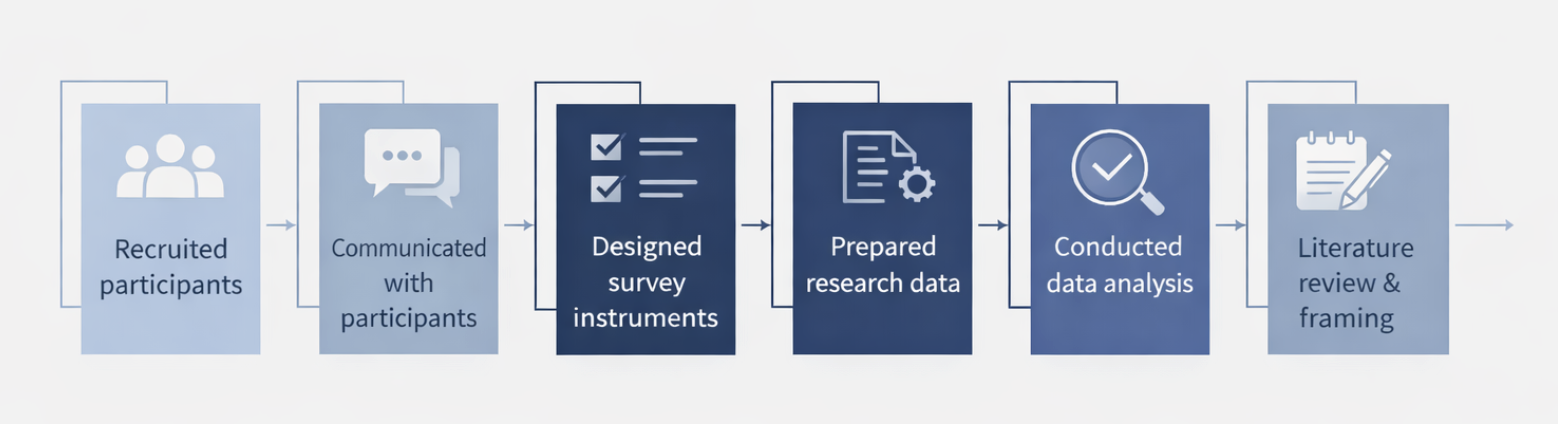
My Role
I contributed across the full research lifecycle:
Sample Size:
16 student participants completed pre-test surveys and 11 completed post-test surveys. Participants were graduate-level counseling students enrolled in clinical training coursework.
Recruitment Source:
Participants were recruited from multiple course sections at Palo Alto University, ensuring variation in experience levels and training exposure.
Demographics:
- Early-career clinicians / trainees
- Graduate students in counseling and psychology programs
- Individuals actively learning diagnostic frameworks (DSM-5-TR)
Selection Criteria:
Participants were selected based on:
- Enrollment in relevant clinical coursework
- Exposure to diagnostic training
- Willingness to engage with AI-supported practice tools
Context of Participation:
Participants completed the study within an academic setting, engaging with AI-based diagnostic exercises and completing pre- and post-assessment measures.
Methodology
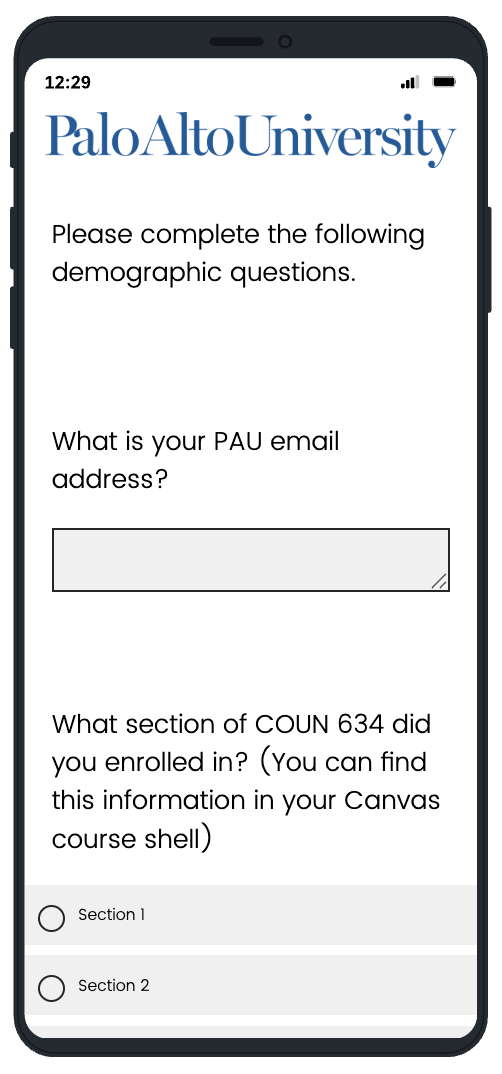
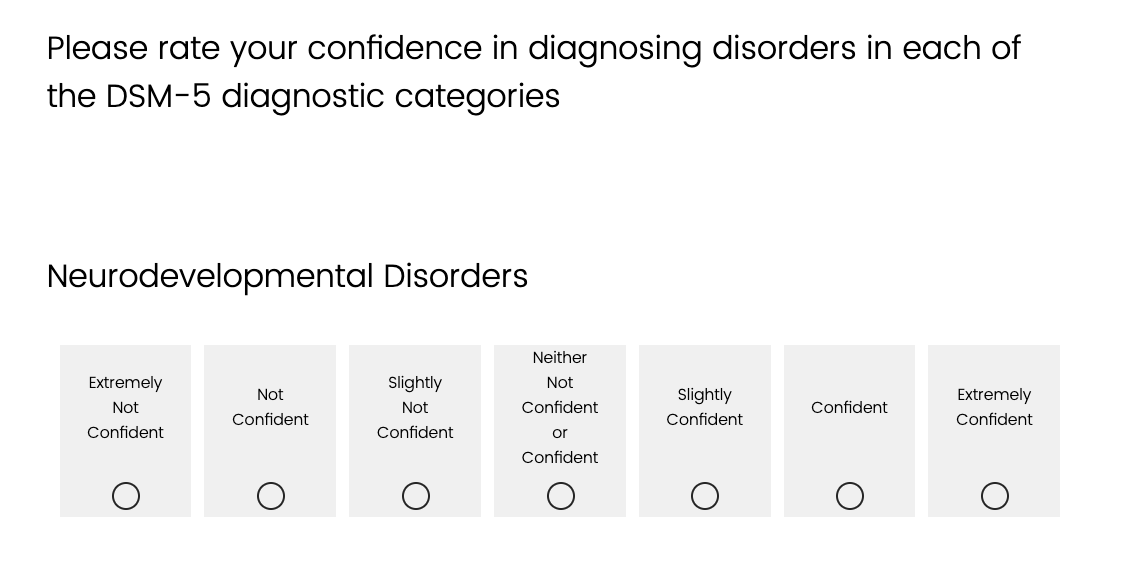
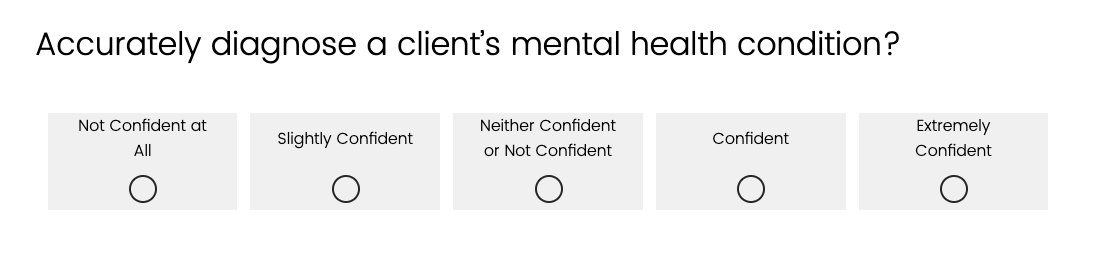
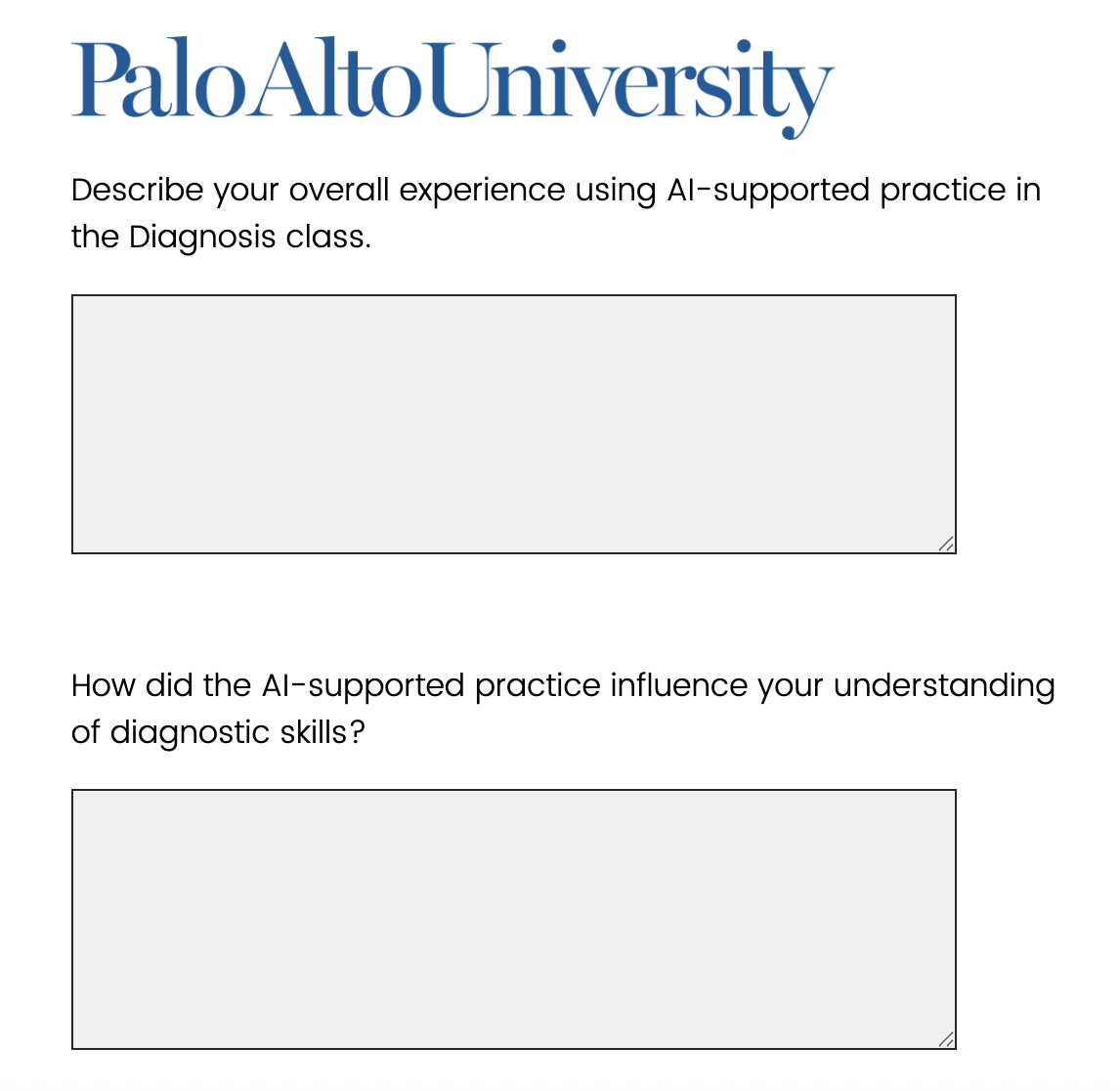
Approach: Convergent mixed-methods consisting of 42 diagnostic self-efficacy items, 22 items related to perceived competence in diagnosing DSM-5 areas, and six open-ended qualitative questions through a Qualtrics survey link virtually shared
Quantitative:
- Pre/post diagnostic self-efficacy surveys
- Welch’s t-tests (unequal samples)
Qualitative:
- Open-ended survey responses
- Thematic analysis (Braun & Clarke)
Key Findings
Increased Diagnostic Confidence
Participants showed significant improvements in both diagnostic self-efficacy and perceived competence, with large effect sizes.
AI as a Cognitive Guide
Users described AI as a tool that supported reasoning by:
- identifying blind spots
- suggesting alternative diagnoses
- encouraging reflection
Repetition Drives Skill Development
AI enabled repeated, low-pressure practice, reinforcing learning more effectively than static case studies.
UX Insights
Insight 1 : Users need iterative, low-stakes practice
AI created a safe environment for trial-and-error learning, increasing engagement and confidence.
Insight 2 :Trust must be actively designed
Users questioned AI accuracy and required external validation throughDSM cross-checking
Insight 3 : Clinical nuance is missing
AI struggled with:
- cultural context
- relational depth
- nuanced interpretation
Insight 4 : Users benefit from “thinking support,” not answers
The value of AI was not in giving correct diagnoses, but in guiding reasoning processes.
Impact
- Significant increase in diagnostic self-efficacy and improved confidence in applying DSM criteria, with large effect sizes indicating a meaningful impact on learning outcomes.
- Enhanced engagement through interactive practice
Reflection
This project highlighted the growing role of AI as a supportive tool for students and clinicians, particularly in areas that require self-confidence and repeated practice. Rather than replacing human judgment, AI can serve as a resource that helps users think through problems, explore different possibilities, and build their skills over time. It creates opportunities for low-pressure, accessible practice that may not always be available in traditional learning environments. At the same time, this experience made it clear that AI should be approached as a complement to human expertise, not a substitute. Moving forward, its value lies in supporting learning, encouraging reflection, and helping users feel more prepared in complex, real-world situations.