
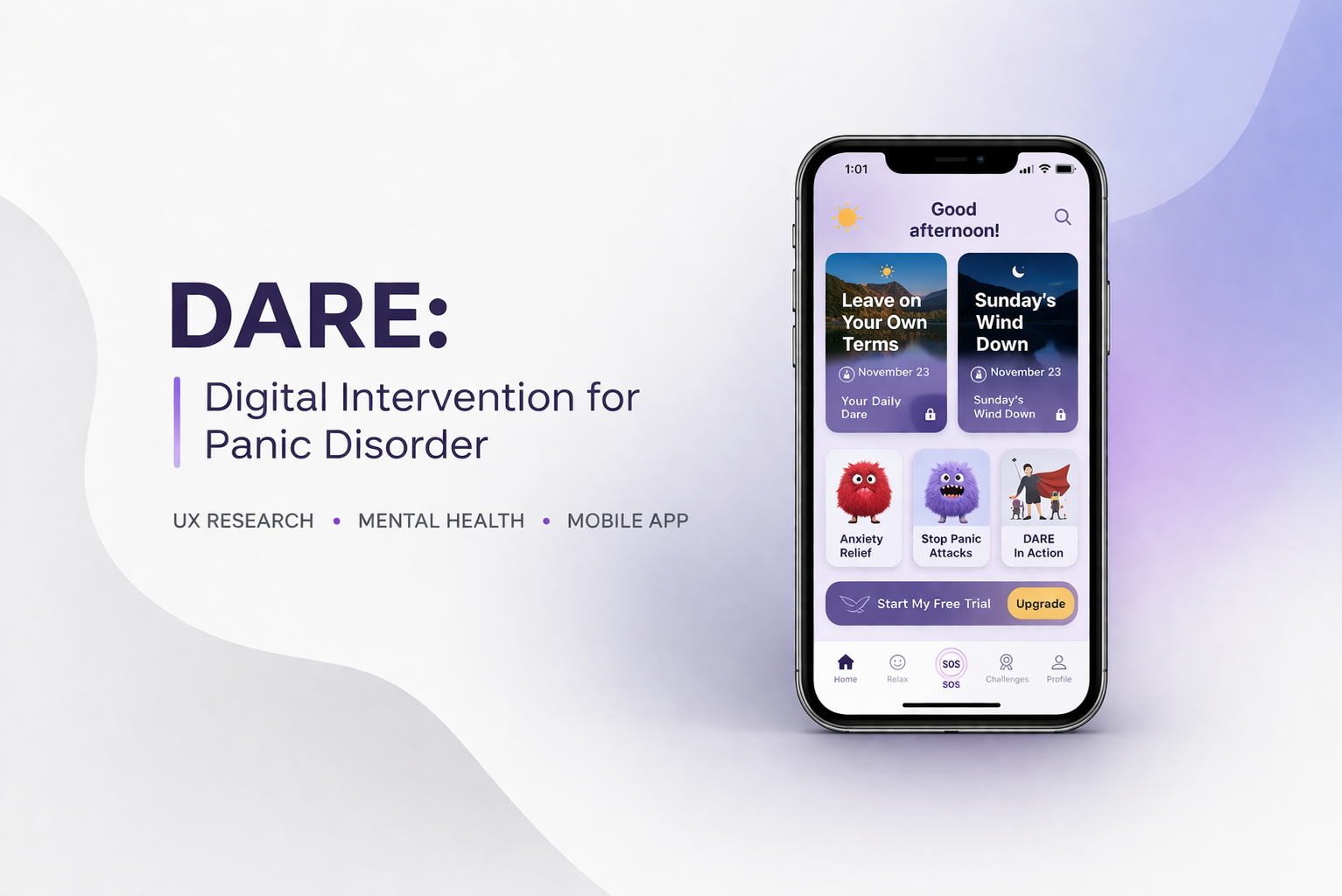
DARE Application: Research Evaluation for panic And Anxiety support
A UX analysis of a digital mental health intervention application for panic disorder and anxiety symptoms.


Role & Personal Contributions
UX Researcher, stakeholder presentation & research report
Duration
November-December 2025
Planning: 3 days • Recruitment: 1 week • Data Collection: 1 week • Analysis & Synthesis: 4 days
Overview
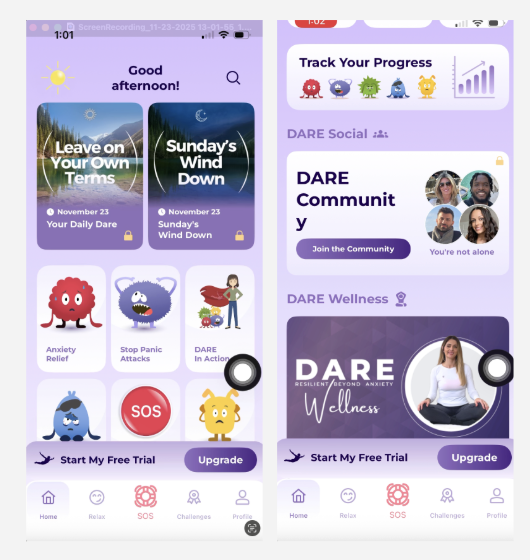
Problem Statement: DARE is intended to reduce panic symptoms & anxiety caused by agoraphobia, panic disorder, or debilitating stress while enhancing positive coping strategies. Panic attacks, however, create high cognitive load. Users need immediate support, but many digital tools fail under real conditions of distress.
Background
- Panic disorder is one of the most common anxiety disorders worldwide with a lifetime prevalence of 2–5%
- It is known for recurrent and unexpected panic attacks, resistance to spontaneous remission, and high comorbidity with other mental health disorders
- Panic disorders affect professional and social quality of life, as well as mental well being (Polak et al., 2021)
Who: adolescents to middle-aged adults (approximately 16–55) who experience panic attacks, panic disorder, panic disorder with agoraphobia, or generalized anxiety
Why: provides fast, accessible tools to manage acute anxiety or high stress with self-guided, mobile mental-health support that fits into everyday life.
Features
Utilizing the DARE Method, a four step approach used to address and accept anxiety instead of avoid, the application incorporates these principles within the key features:
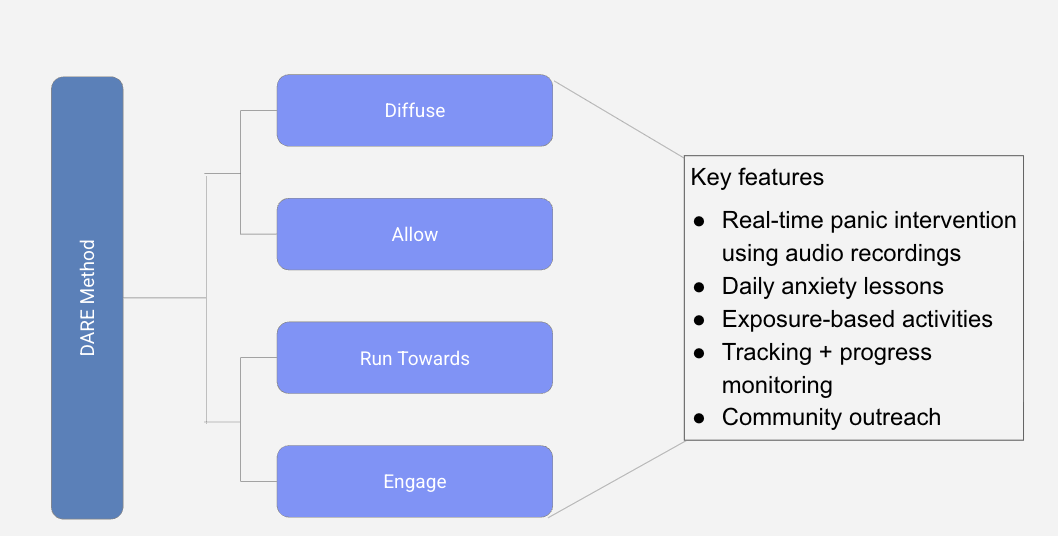
Why Features Work
Breathing Exercises
Guided deep breathing to reduce physiological arousal during panic attacks
Supported by clinical research on anxiety regulation
Mood & Panic Journaling
Allows users to log triggers, thoughts, and emotional responses
Commonly used in CBT-based interventions
Psychoeducation
Structured lessons teaching cognitive restructuring and coping strategies
Grounded in established CBT frameworks
Progress Tracking
Monitors frequency and severity of panic symptoms over time
Supports long-term behavior awareness and improvement
Selected Research Foundations
Leyro et al., 2021 · McManus et al., 2012 · Barlow et al., 2007 · Kerzner, 2024
Research Goals
- Understand how users navigate panic-related content
- Assess emotional comfort and sense of safety
- Evaluate clarity and usability of the DARE sequence
- Identify barriers to engagement during moments of panic
- Find user interface preferences
What the Research Says
Exposure-based approaches are highly effective The “Run Towards” component of DARE aligns with exposure therapy, one of the most effective treatments for anxiety disorders.
Acceptance-based techniques reduce avoidance and panic severity ACT-based approaches (Diffuse + Allow) help users engage with symptoms rather than avoid them, leading to meaningful reductions in anxiety.
Digital interventions can produce strong clinical outcomes Research shows digital tools for panic disorder achieve strong effect sizes, with up to 80% of users experiencing symptom improvement.
Accessibility is critical in mental health design Audio-based formats reduce literacy barriers and allow users to access support without stigma or in-person constraints.
Based on research including Craske et al., 2014; Eifert & Forsyth, 2005; Pauley et al., 2023
Methods
- Qualitative & attitudinal based interview with 2 participants
- Length of time: approximately 20-30 minutes
Section of Script
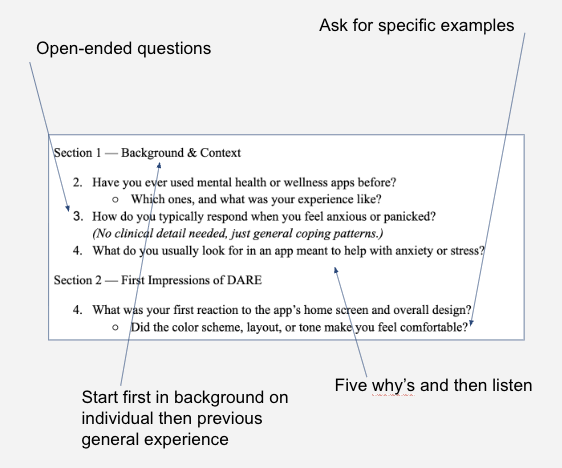
Focus Ares for Interview
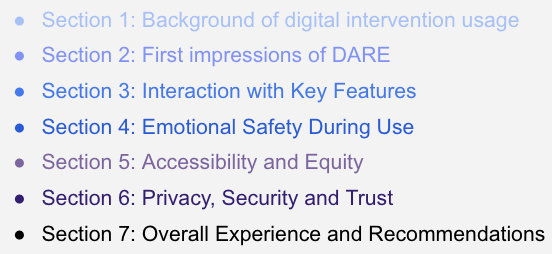
Expected Design Insights
Anticipated Recommendations:
- More grounding instructions during high-anxiety moments
- Simplified navigation for rapid access during panic
- More diversity in interactive experience
Questions for UX peers:
- How to best test features designed for use during distress?
- What privacy expectations do users have for mental-health apps?
Key Insights
1. Evidence-based structure builds credibility, but clarity is still vital
DARE aligns closely with established CBT and ACT approaches, particularly through its use of exposure-based and acceptance-based techniques. This provides a strong clinical foundation for panic intervention.
However, users still required clearer, more immediate guidance when navigating the app during moments of distress.
2.Simplicity and tone support emotional safety
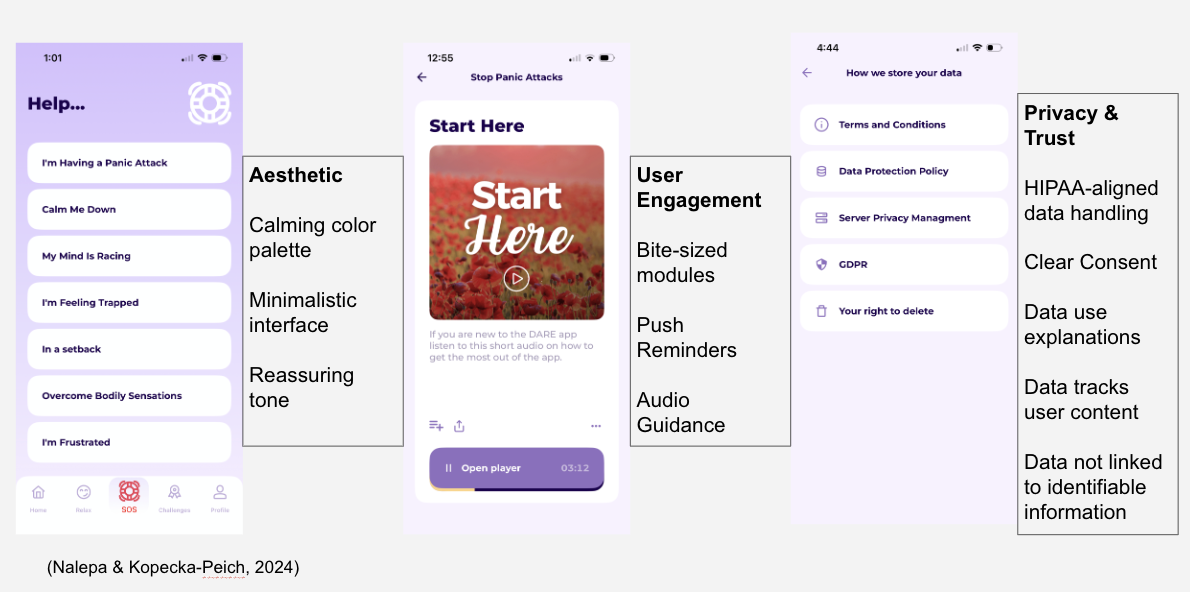
Participants consistently described the interface as simple and reassuring, with a tone that felt supportive during anxious moments.
“It was relatively simple with the bar along the bottom.”
“The instructions were clear and the tone felt reassuring.”
This suggests that minimal design and empathetic language play a key role in reducing cognitive load.
3.Lack of interactivity reduces engagement during high stress moments
While audio guidance was helpful, users reported difficulty maintaining attention during longer sessions.
“I felt like they were engaging and helpful but started to get long and repetitive… without any interactive parts.”
This highlights a need for multi-modal interaction, especially when users are experiencing cognitive overload.
4.Paywalls undermine trust in vulnerable contexts
Participants expressed strong negative reactions to locked features, particularly in a mental health setting.
“It didn’t feel trustworthy because everything was locked behind a paywall.”
Trust is critical in digital health, monetization strategies can directly impact perceived safety and credibility.
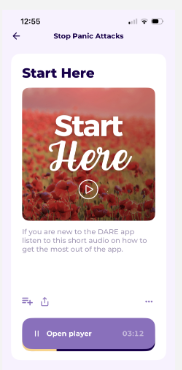
Human-centered Design & Ethics
- Useful: grounded in CBT and ACT
- Usable: simple UI with rapid access
- Desirable: supportive, reassuring, and validating tone
- Accessible: mobile platform, limited text
- Credible: Utilizing evidence based practices
Given ethical assessment:
- The intervention needs to provide psychoeducation responsibly
- must ensure crisis-appropriate disclaimers
- Needs clearer data transparency
- Consider removal of payment for enhanced care
Equity, Digital Determinants of Health, & Clinical Validity

Final Takeaways
- DARE shows strong promise as a digital adjunct for panic disorder
- App features do correspond with CBT and ACT practices
- Further studies need to be conducted on long term usage for DARE digital intervention
- Keep validating tone, calming color scheme, main bottom control panel
To increase engagement in app, I recommend:
- Priority 2:
- Provide more data transparency on purchase, identifiers, diagnostic, user content, and usage data collection
- Possible rebrand from health and fitness application to medical support to increase credibility
- Remove ethical barrier of cost for enhanced treatment
- Priority 3:
- Create an interactive game or storyline